Field-first drone trials
Early agricultural drone programs recorded real sortie hectares and battery staging needs instead of lab-only spray patterns.
Vision roadmap
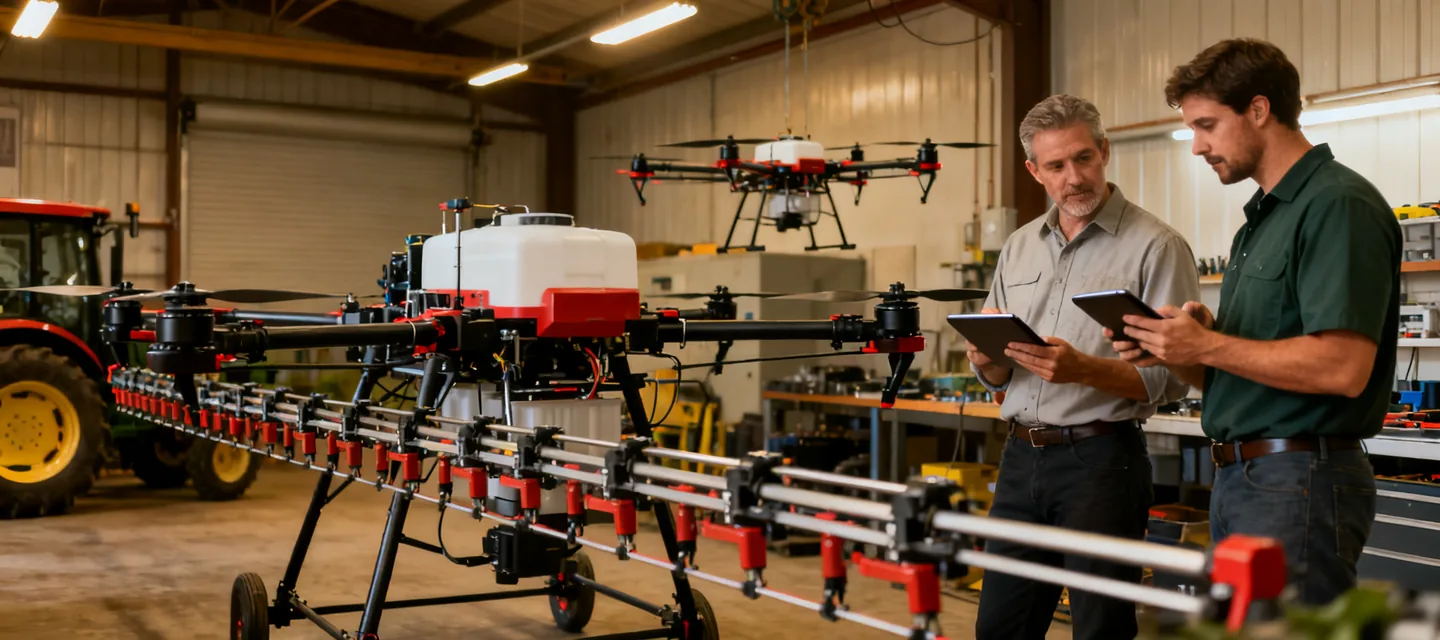
XAG pairs agricultural drone and sprayer manufacturing with practical buyer guidance so growers shortlist equipment against field geometry, tank logistics and spray drift limits—not catalog popularity alone.
Roadmap through 2030
Instead of chasing every optional sensor, XAG focuses on three milestones: clearer drone-versus-boom comparison sheets, faster dealer commissioning for mixed fleets, and parts windows that match disease and insect pressure calendars. The 2030 target is a shared acceptance packet that growers, agronomists and dealers can sign without rewriting emails each spray season.
Publish tank capacity, working width, sortie rate and buffer notes in one review pack for agricultural drones and boom lines.
Connect calibration checklists to regional crop calendars so peak-week slots are reserved before the first fungus window.
Deliver a signed field packet covering nozzle class, drift notes and critical SKU staging for every major delivery.
Early agricultural drone programs recorded real sortie hectares and battery staging needs instead of lab-only spray patterns.
Advisors began documenting when boom sprayers still win litres per hour so growers were not sold aerial platforms for the wrong blocks.
Nozzle class, pressure bands and buffer strip notes became a shared handoff between factories, dealers and farm spray crews.
Critical tips, filters and battery packs moved to a staged calendar with peak-season response targets for transnational buyers.
XAG grew from a simple observation: many CapEx regrets start when a farm buys the most visible machine instead of the path that matches block shape. Friendly advisors sit with growers to translate crop plans into equipment families—agricultural drones for fragmented access, boom sprayers for contiguous throughput, orchard mist packages for canopy work. Manufacturing remains disciplined under ISO 9001 process controls and CE documentation scoped to the order; those papers support export paperwork but do not replace on-farm calibration. The company still treats spray drift control, tank logistics and labor coverage as first-class constraints, because a beautiful airframe that cannot finish a disease window is just expensive inventory.
Dealers and agronomists remain partners in the selection chain. XAG does not pretend every farm needs the same P100 or P150 class drone, nor that every orchard can abandon ground misting. The roadmap keeps comparison tables honest, commissioning checklists shared, and parts packs timed to the calendar you actually spray—so the next CapEx cycle starts with fewer unanswered questions.
Checkpoints that influence equipment acceptance—roles, not endorsements.
Bring acres, canopy notes and the pests that define your season. We return a shortlist with acceptance criteria you can hand to a dealer.